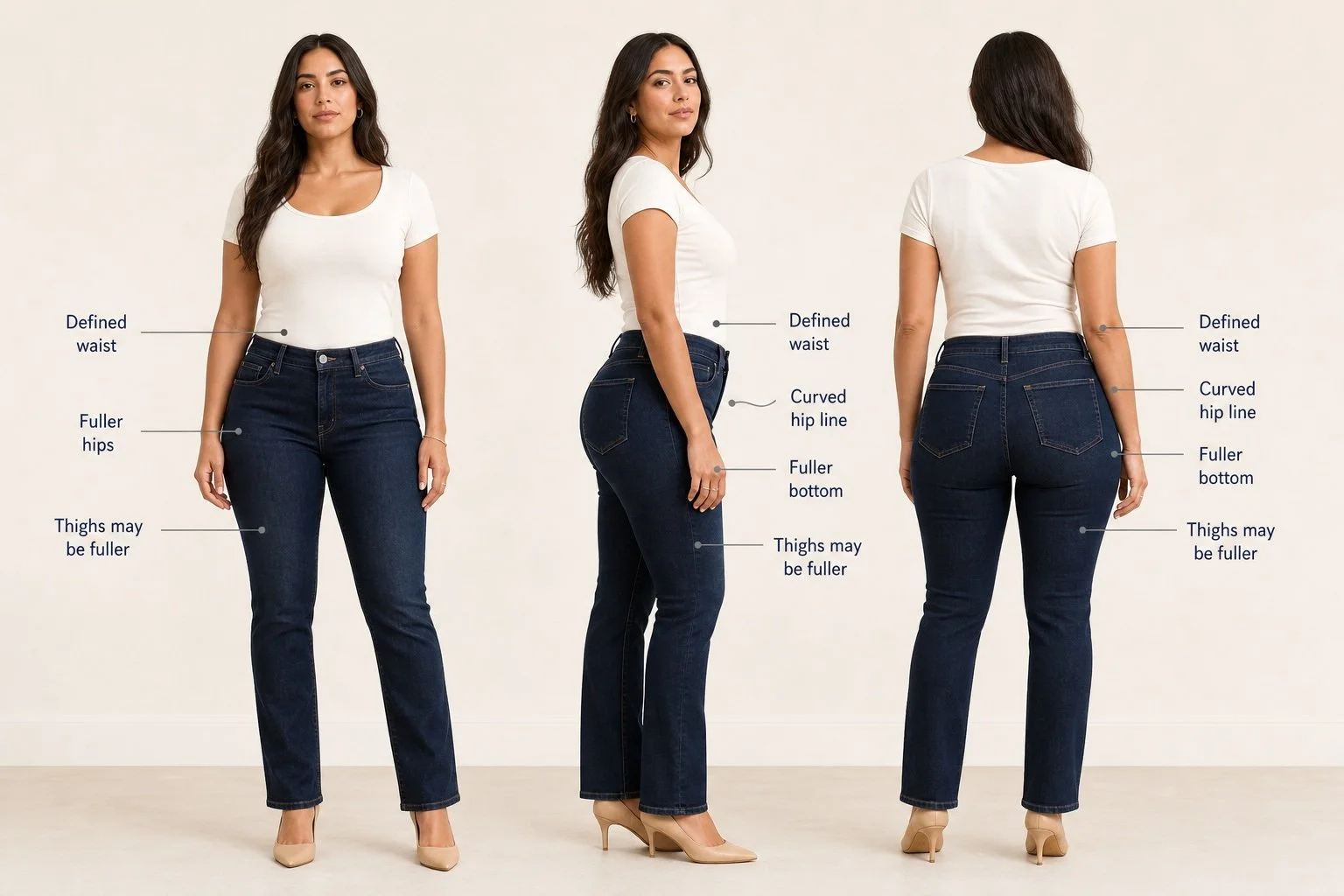
If you have a curvy body shape, you may have a smaller waist, fuller hips, a fuller bottom and a more defined hip curve.
Curvy doesn’t refer to your clothing size. It’s about the difference between your waist and hips. You can have a curvy body shape whether you wear a size 8 or a size 22.
The challenge is rarely getting into a pair of jeans. It’s finding a pair that fits your waist and your curves at the same time, without gaping at the back, pulling across the hips or feeling too tight through the thighs.
The best curvy jeans should work with your proportions, not fight against them. They need enough room through the hips and seat, a waistband that sits smoothly at the waist, and denim with enough stretch and recovery to move comfortably while holding its shape.
This guide will help you understand what to look for in curvy jeans, including rise, waistbands, stretch, leg shape, back pockets and hem length.
Your Body Shape Is A Starting Point, Not A Rule Book.
Jeans for Curvy Body Shapes
ON THIS PAGE
Key Characteristics
Common curvy body shape characteristics include:
Defined Waist
Your waist is noticeably smaller than your hips, creating a more defined silhouette.
Fuller Hips
Your hips have more curve, creating a noticeable difference between your waist and hip measurements.
You may naturally carry more shape through your upper thighs, giving your body soft, balanced curves.
Thighs May Be Fuller
Fuller Bottom
A fuller bottom is a common characteristic of a curvy body shape and contributes to your overall proportions.
Curved Hip Line
Your shape has a visible curve from your waist to your hips, creating a naturally feminine silhouette.
What Curvy Jeans Need to Do
A curvy body shape has a more defined waist, fuller hips and often a fuller bottom, so your jeans need to work with all of those proportions at the same time. Rather than simply fitting, they should follow your natural shape comfortably without pulling, gaping or restricting movement.
The right pair should support your curves, create a smooth silhouette and keep everything balanced from waist to hem. When your jeans are designed to work with your proportions, they feel more comfortable, look more flattering and move with your body throughout the day.
What to Look for in Curvy Shape Jeans
Once you understand what curvy jeans need to do, the next step is knowing which fit details make the biggest difference.
The best curvy jeans combine several features that work together, including the right rise, a waistband that sits comfortably, denim with good stretch and recovery, a flattering leg shape, well-placed back pockets and the right hem length.
Use these fit details as a checklist whenever you try on jeans.
Rise
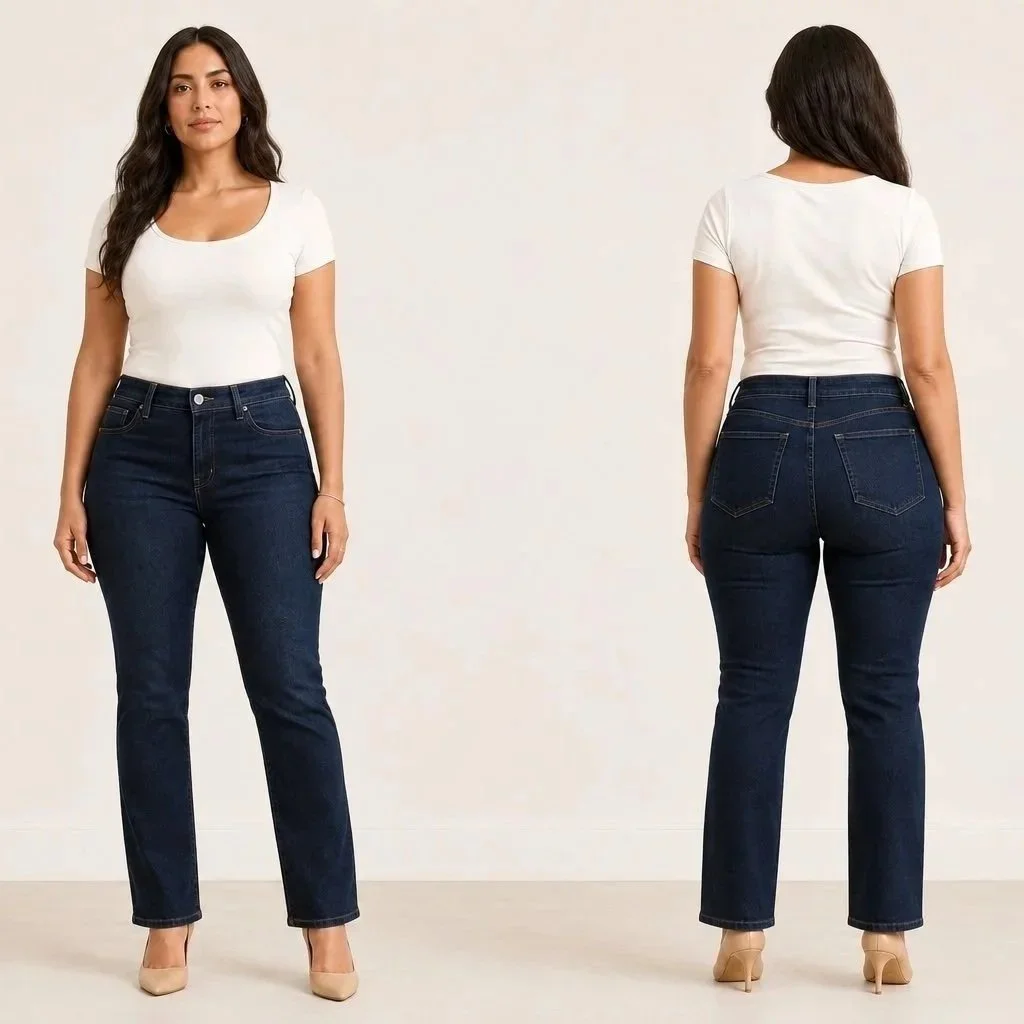
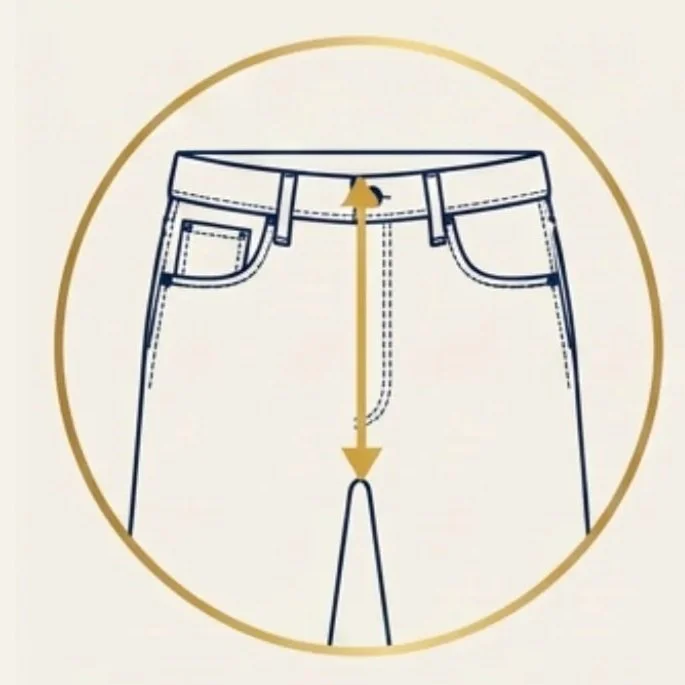
For a curvy body shape, the right rise helps jeans sit comfortably at your waist while giving enough room through your hips and bottom.
A mid- to high-rise often works well because it follows your natural waist, reduces gaping at the back and creates a smoother line from waist to hip. It should feel secure without digging in, rolling down or feeling restrictive.
If the rise is too low, the waistband may sit below the narrowest part of your waist and create gaping at the back. If it’s too high, it may feel uncomfortable when you sit down or move around.
If you’re unsure where your ideal rise sits, use my How to Measure for Jeans guide to measure the front rise on a pair you already own and love.
Waistband
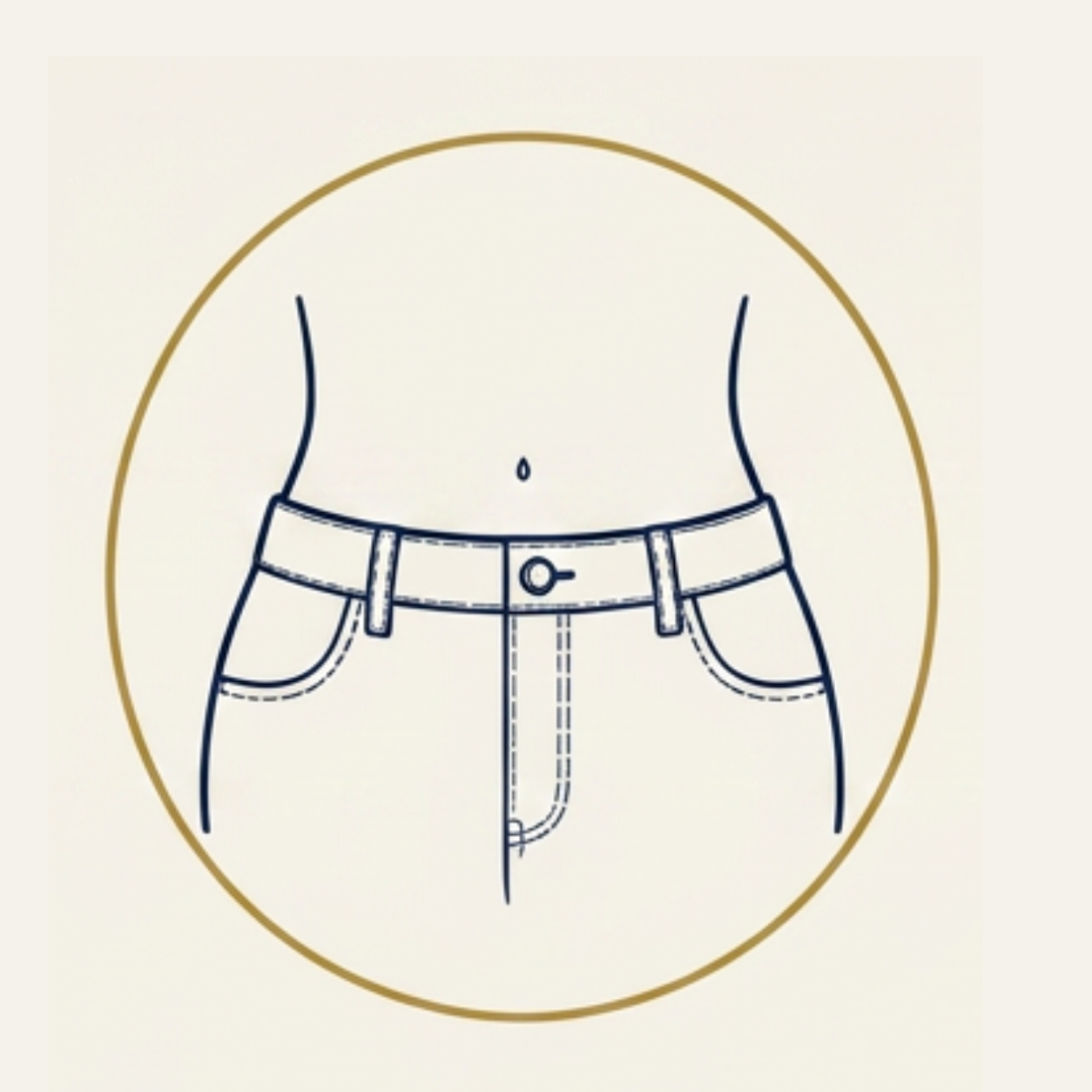
For a curvy body shape, the waistband is one of the most important parts of the jean. Because your waist is usually smaller than your hips, a straight waistband can leave a gap at the back, even when the jeans fit well through the hips, bottom and thighs.
A contoured waistband follows the curve from your waist to your hips, helping the jeans sit closer to your body.
Look for terms such as curvy fit, curve fit, gap-proof waistband, contoured waistband or tailored hip-to-waist ratio. As a general guide, many brands design curvy-fit jeans for women with around a 10-inch (25 cm) or greater difference between their waist and hip measurements. If your waist-to-hip difference is smaller, a regular fit may suit you better.
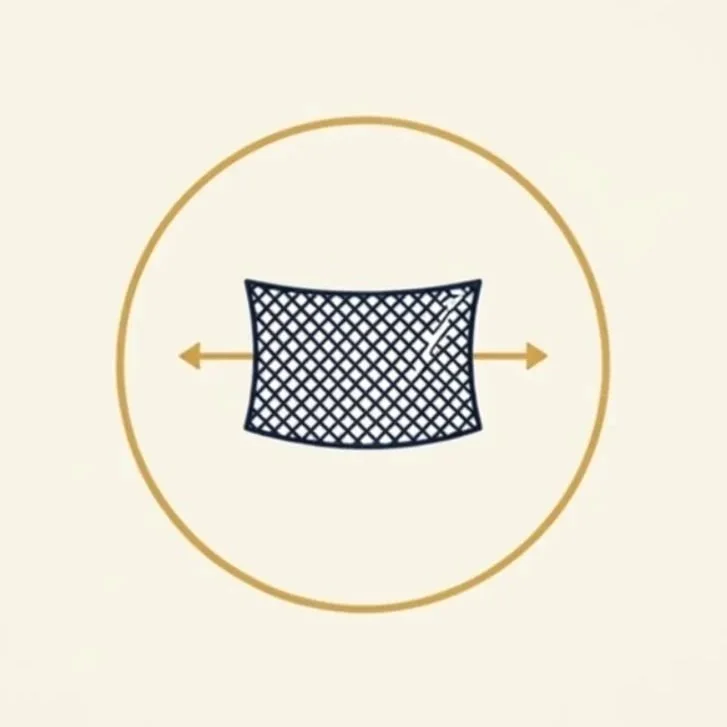
Stretch & Recovery
For a curvy body shape, stretch is important, but stretch on its own isn’t enough. The best jeans should move comfortably with your hips, bottom and thighs while still holding their shape throughout the day.
When checking the fabric composition, look for around 1–2% elastane, Lycra® or spandex for stretch and comfort. For recovery, fibres such as polyester, recycled polyester or Elasterell-P help the denim bounce back after stretching, reducing bagging around the knees, seat and waistband.
You may also see rayon, viscose, Lyocell or TENCEL™ Lyocell, which create a softer, smoother feel. They can be very comfortable, but if the denim is extremely soft with little recovery, it may not hold its shape as well through the waist, hips and seat. Likewise, jeans made from almost 100% cotton can feel more rigid and less forgiving on a curvy body shape.
New to denim fabrics? Read our Guide to Stretch & Recovery.
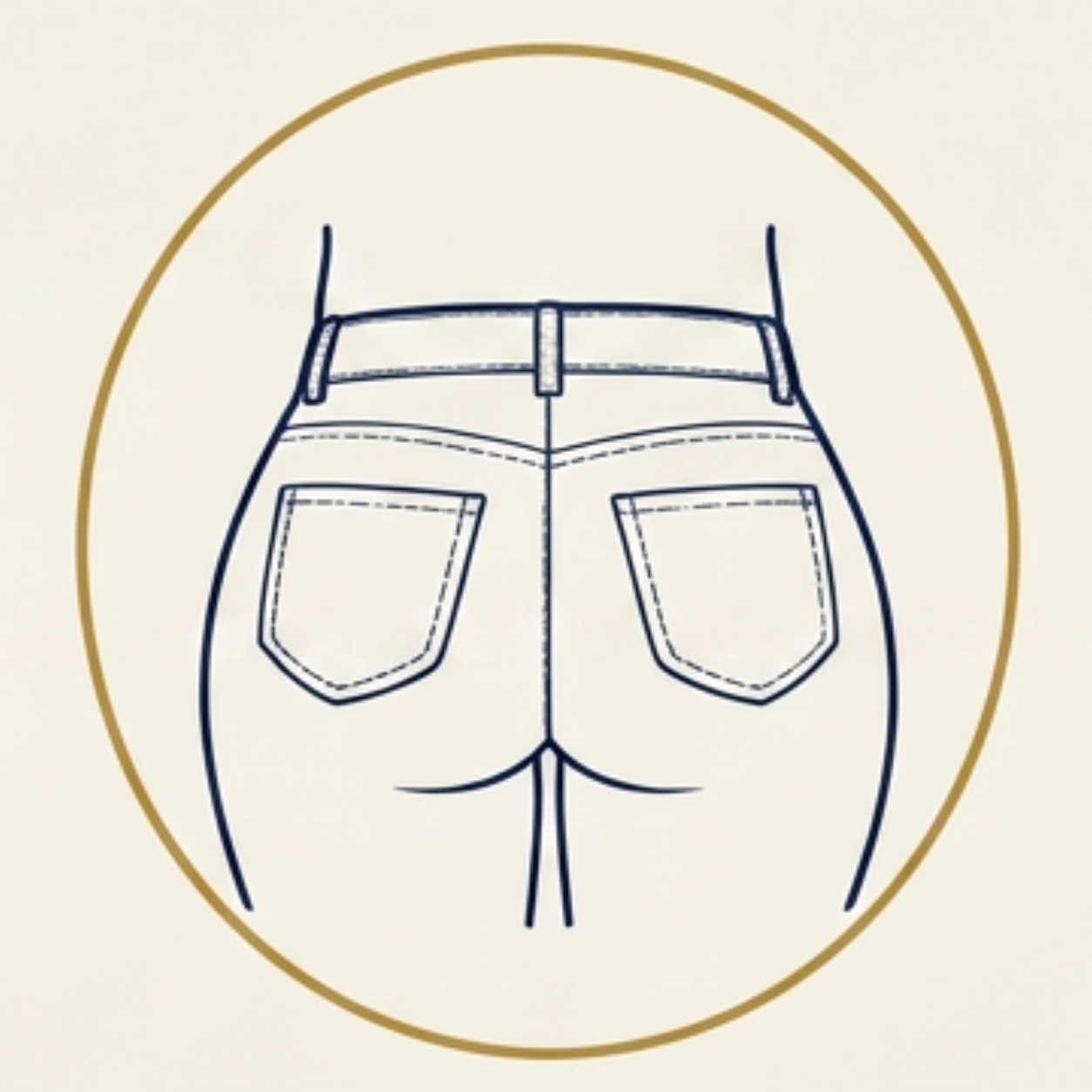
Back View
For a curvy body shape, the back view matters just as much as the front. The jeans should follow your curves comfortably without flattening your bottom, pulling across the seat or creating drag lines under the hips.
Back pockets make a big difference. Pockets that sit slightly higher and closer together often create a more balanced, lifted look, while pockets that are too low, too wide or too small can alter the proportions of the back view.
A curved or sweetheart-shaped back yoke can also help the jeans follow the natural curve from your waist to your hips. Combined with a contoured waistband or subtle shaping seams, these details help the jeans fit your curves smoothly and hold their shape throughout the day.
Leg Shape
For a curvy body shape, the right leg shape should create balance while following your natural proportions.
Straight-leg and slim straight jeans are a great starting point because they create a clean, balanced silhouette without clinging too tightly. Bootcut and flare jeans can also work beautifully, as the extra width below the knee helps balance fuller hips and thighs.
Wide-leg, mom and barrel-leg jeans can all be flattering too, provided they fit neatly through the waist and hips before falling smoothly through the leg. The key is choosing styles with enough room to move comfortably without adding unnecessary bulk.
Be cautious with very tight skinny jeans if they make your lower half feel out of proportion, and with overly oversized styles if they hide your waist and natural shape.
Want to compare every jean silhouette? Explore our Guide to Jean Leg Shapes.
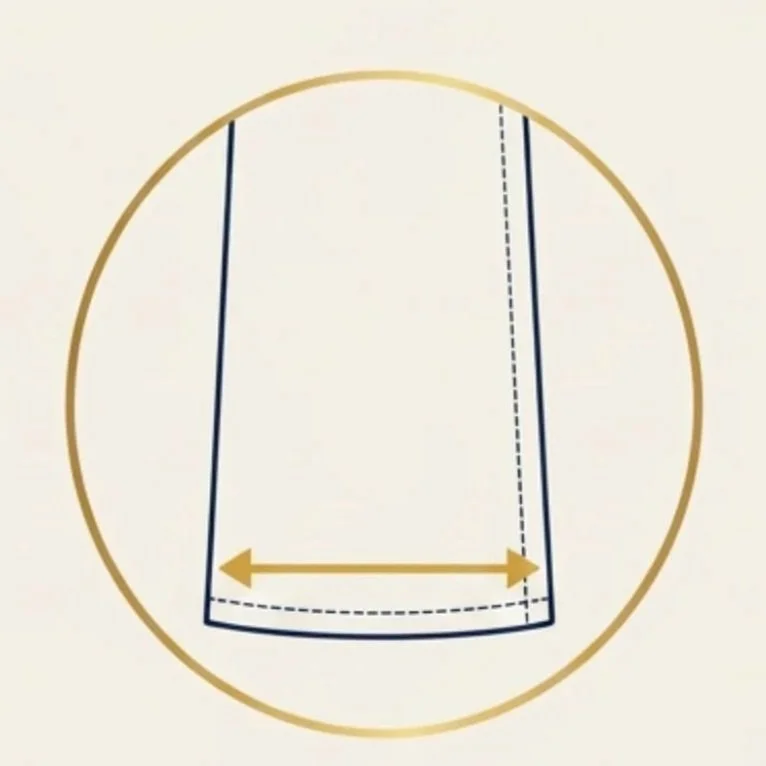
Hem
The right hem finishes your jeans and helps create balanced proportions. It should work with the shoes you wear most often and look intentional rather than too short or dragging on the floor.
When trying on jeans, bring the shoes you expect to wear with them. Full-length styles should skim the top of your shoe without excessive bunching, while cropped styles should finish deliberately above the ankle rather than looking accidentally short.
If your jeans are slightly too long, consider having them professionally shortened rather than letting the hems wear away. A simple cuff can also work well on straight-leg styles if it suits the look. The right hem does more than finish your jeans—it helps create balanced proportions and gives your outfit a polished look. Whether you prefer cropped, full-length, cuffed or wide-leg jeans, the hem should work with your height, proportions and the shoes you wear most often.
Want to understand the different hem styles?
→ Explore the Guide to Different Jean Hems
💡 Sam’s Tip
Don’t just look for stretch, look for stretch and recovery.
Reading the fabric label can feel a bit like looking under the bonnet of a car. But once you know what to look for, it tells you how your jeans are likely to perform.
If your jeans feel comfortable when you first put them on but become loose at the waist, baggy at the bottom or stretched out at the knees after a few hours, they probably don’t have enough recovery for your shape.
Comfort at 9 am is lovely. Your jeans should still look good at 4 pm.
Quick Questions About Jeans for Curvy Body Shapes
-
The best jeans for curvy body shapes usually have a contoured waistband, enough room through the hips and bottom, and stretch with good recovery. Straight leg, bootcut, flare, cropped kick flare and wide leg jeans can all work well, depending on your proportions and the shoes you wear them with.
-
Curvy fit jeans are usually designed for a smaller waist and fuller hips, bottom or thighs. They often have a more shaped waist-to-hip ratio, extra room through the seat and thigh, and a waistband designed to reduce gaping at the back.
-
Waist gaping usually happens when the jeans fit your hips and bottom but the waistband is too straight or too big for your waist. A contoured waistband, hidden elastic waistband, side adjusters or a curvy-fit cut can help the jean sit closer to the waist.
-
High-rise jeans can work well for curvy body shapes because they help define the waist and create a smooth line from waist to hip. The rise should feel comfortable when you sit and move. If it digs in, rolls down or feels too restrictive, try a slightly lower rise or a different waistband.
-
You may need curvy fit jeans if regular jeans fit your hips and bottom but gap at the waist, or if jeans that fit your waist feel too tight through the hips, seat or thighs. As a guide, many curvy-fit jeans are designed for a waist-to-hip difference of around 10 inches or more, but this varies by brand.
-
Check the size chart, waist measurement, hip measurement, rise, inseam, fabric content and return policy. Look for words such as curvy fit, contoured waistband, gap-proof waistband, stretch with recovery and extra room through the hip and thigh.
Ready to Stop Guessing and Start Loving Your Wardrobe?
Finding jeans that fit is only the beginning.
When you know which styles work for your body, getting dressed becomes easier, shopping becomes less overwhelming, and your wardrobe finally starts working for your real life.
If you’d rather stop second-guessing every purchase and have an expert guide you through the process, The Everyday Luxe Method is a personalised styling experience designed to help you find the right jeans, build effortless outfits and create a wardrobe you’ll love wearing every day.